

Your guest article is live. The link opens. The publisher has sent the final URL.
But a month later, you still have a question: did it help your business?
A live article proves that the publishing work was delivered. To judge its value, you need to look at who saw it, who visited your website, and what happened next.
Yes, guest posting can still work when it reaches the right readers and gives them a useful reason to visit your website. Its value depends on the audience, article, destination page, cost, and goal. A published backlink alone does not prove more traffic, enquiries, or sales.
Here is a practical way to decide whether guest posting deserves more of your time and budget.
First, decide what “works” means
Guest posting means contributing an article to another website. That article may introduce your knowledge, explain a problem, or direct readers to a useful resource.
Different businesses want different results from that work.
A software company may want product trials. A local service business may want quote requests. A consultant may want relevant people to read a detailed guide and remember their name.
Pick one main goal before you choose the publisher.
| Main goal | Evidence to collect | What does not prove success on its own |
|---|---|---|
| Reach relevant readers | Article readership data, audience fit, and distribution details | Total traffic across the publisher’s whole website |
| Bring visitors to your site | Measured referral sessions and landing pages | A link that is technically clickable |
| Generate enquiries | Genuine enquiries connected to the placement | Every form submission, including spam |
| Win customers | Confirmed sales and the limits of attribution | A lead that has not become a customer |
| Build recognition | Relevant mentions, reader responses, and self-reported discovery | An authority score increase |
| Support search visibility | Search trends assessed alongside other changes | A ranking change after publication |
You can track more than one outcome. Still, choosing a main goal makes it easier to decide whether a placement was worth repeating.
Guest posting for readers and guest posting for rankings
A useful guest article can reach people who would not otherwise find your business. Whether a search engine gives a particular link ranking credit is a separate question.
Google’s spam policies describe links created primarily to manipulate rankings as link spam. Examples include buying links for ranking purposes and distributing guest posts with optimized anchor text in ways covered by that policy.
That means “we will publish your article” and “this will improve your rankings” are different claims. The first can be checked directly. The second needs evidence and cannot be guaranteed.
For paid placements, Google’s link qualification guidance recommends rel="sponsored". It also accepts nofollow for paid links.
These attributes do not stop a person from clicking a working link. A paid article can therefore have referral value even when the link is properly qualified.
Our sponsored guest post guide explains how reader-facing labels and link attributes serve different purposes.
1. Check whether the publisher reaches your customers
Start with the people you want to reach.
Imagine you sell scheduling software to home-service companies. A specialist publication read by business owners may fit your goal better than a large general website whose popular articles cover unrelated subjects.
The larger website may have more visitors overall. That does not tell you how many will read your article or need your product.
Review recent articles in the section where your contribution would appear. Ask:
- Do these articles cover problems our customers have?
- Is the audience in a country or market we serve?
- Can readers find new articles through useful category pages?
- Does the publisher have a clear editorial focus?
- What distribution, if any, is included?
If a newsletter or social post is part of the offer, record that detail before publication. Do not assume it is included.
Treat traffic estimates as screening evidence
Third-party traffic estimates can help you compare publishers. They are not a promise of article views or clicks.
Look beyond one number. Check which pages and topics appear to attract visitors. A site’s overall traffic is less useful when it comes from content unrelated to your audience.
If the publisher shares readership figures, ask whether they describe the whole website, the relevant section, or comparable individual articles. Also ask which date range they cover.
Use our guide to finding guest post opportunities when building your shortlist. This article focuses on judging the results after that shortlist becomes a campaign.

2. Give readers a reason to click
A reader should understand why the linked page is useful.
A link added only because a package includes one may receive little attention. A link that helps readers complete the task in front of them has a clearer purpose.
For example, an article about planning a website review could point to an audit worksheet. An article about choosing support software could point to a relevant product demonstration.
The destination should match the promise made by the surrounding text.
Before publication, open the link on your phone and check:
- Does the correct page load?
- Does it answer the question that led to the click?
- Is the next action easy to understand?
- Does the form or signup process work?
You do not need to rebuild every old article to run this test. Choose an existing page that fits the reader’s need. If no suitable page exists, consider creating a useful new destination before commissioning the placement.
Our guide on how to write a guest post covers planning an article around a real reader problem.
3. Set up measurement before the article goes live
Keep a simple record for each placement. Without one, it becomes hard to compare articles fairly.
| Field | What to record |
|---|---|
| Publisher and article URL | The exact live page |
| Publication date | When readers could first access it |
| Main goal | Visits, qualified enquiries, trials, or another outcome |
| Destination page | Where the article sends readers |
| Total campaign cost | Writing, placement, images, and agreed internal time costs |
| Promotion included | Newsletter, social sharing, or none promised |
| Review dates | Planned dates to assess results |
| Tracking limits | Missing data, shared referral sources, or other uncertainty |
An unpaid contribution still has a cost if it takes time to research, write, and edit. Decide how you will account for that time, and use the same method across placements.
If you use campaign tags in destination URLs, agree them with the publisher. Use them consistently and avoid personal information in tracking parameters. Where tags are not allowed, record the clean URL and explain the limits of measuring the article separately.
What to check in Google Analytics 4
Google’s GA4 Traffic acquisition report shows where sessions from new and returning users came from. Use Session source / medium to inspect a publisher’s traffic for the relevant date range.
Review sessions, engaged sessions, and properly configured key events. Google’s report defines an engaged session as lasting at least 10 seconds, having 1 or more key events, or including 2 or more page or screen views.
Those are measurement rules, not proof of buying interest. A reader can meet an engagement rule without needing your service.
Also, a publisher referral source may combine several articles from the same domain. Unless your tracking distinguishes them, report the result at publisher level rather than assigning every visit to one post.
Test your measurement setup before relying on it. A missing or broken enquiry event can make a campaign look weaker than it is.
4. Separate visits, enquiries, and qualified leads
These numbers answer different questions.
Visits tell you that people arrived.
Enquiries tell you that some people made contact.
Qualified leads tell you that some enquiries fit what your business offers.
Define “qualified” before reviewing the results. For a service business, this might mean someone in a served location asking for an available service with a realistic project need.
Exclude spam, test submissions, job applications, and sales pitches from your sales-lead count. If the same person submits twice about one project, avoid counting that as two new leads.
A short “How did you hear about us?” field or a question during a sales call can add context. Treat that answer as self-reported evidence, rather than perfect tracking.
Keep three types of information separate:
| Evidence type | Example | How to describe it |
|---|---|---|
| Measured | Analytics records a visit from the publisher | Recorded referral session |
| Self-reported | A prospect says they read your guest article | Prospect-reported discovery |
| Inferred | Brand searches rise after the campaign | Possible contribution, not proven attribution |
This distinction helps you avoid turning a reasonable guess into a confident claim.

5. Compare costs with meaningful outcomes
Use simple calculations to make placements easier to compare.
Cost per recorded referral session = total campaign cost ÷ recorded referral sessions.
Cost per qualified lead = total campaign cost ÷ qualified leads attributed under your stated method.
If there are no qualified leads, report zero leads and the spend. Do not display a zero cost per lead, because that would suggest the leads were free.
Worked example: two fictional guest posts
The following figures are invented to explain the method. They are not typical results or a Worsoo case study.
Both placements are reviewed after the same period using the same measurement rules.
| Result | Placement A | Placement B |
|---|---|---|
| Total campaign cost | $400 | $300 |
| Recorded referral sessions | 100 | 40 |
| Genuine enquiries | 8 | 5 |
| Qualified leads | 2 | 4 |
| Cost per referral session | $4 | $7.50 |
| Cost per qualified lead | $200 | $75 |
Placement A brought more visits at a lower cost per session. Placement B brought more qualified leads at a lower cost per lead.
If the main goal was qualified enquiries, B would deserve closer attention. If the goal was broad readership, you would need additional reach evidence before choosing a winner.
Neither result proves profit. You still need to know which leads became customers and what those customers were worth after delivery costs.
The sample is also small. One extra customer could change the comparison greatly. Use it to guide a careful next test rather than assume the same outcome will repeat.
6. Review guest posting results over a fair period
Do not compare a post published yesterday with one that has been live for three months.
Use the same elapsed period where possible. Record important differences, such as one article receiving newsletter promotion and another receiving none.
Here is a practical review schedule you can adapt. These are suggested check-in points, not promises about how long results take.
| Review point | What to check | Decision it supports |
|---|---|---|
| On publication | Article accuracy, link destination, placement terms, and access | Was the agreed work delivered? |
| Around 30 days | Recorded referrals, tracking quality, and promised promotion | Is the article reaching people, and can we measure it? |
| Around 60 days | Enquiry quality, landing-page experience, and sales feedback | Is the audience a useful fit? |
| Around 90 days | Cost, qualified leads, customers, and remaining uncertainty | Repeat, adjust, pause, or review later? |
Some businesses have longer buying cycles. Set the review period around the goal and how customers usually make decisions.
Avoid buying several more placements simply because the first article is live. Wait until the evidence is useful enough to support that decision.
7. Diagnose weak results before spending more
Low results can have different causes. Match the next check to the problem you can actually observe.
| What you observe | What to investigate next |
|---|---|
| No recorded referral sessions | Tracking, the link, article visibility, and promised distribution |
| Visits but little useful activity | Audience fit and whether the destination matches the article |
| Engagement but no enquiries | Reader intent, offer clarity, form usability, and measurement |
| Enquiries that do not fit | Topic, geography, audience, and how the service is described |
| Qualified leads but no sales | Sales follow-up, timing, price fit, and buying cycle |
| Better rankings but little referral traffic | Other site changes and search trends before claiming a cause |
For example, zero recorded referrals do not automatically prove that nobody clicked. Tracking may be incomplete. Check that possibility, but do not invent missing visits to make a campaign look successful.
Likewise, a working form does not mean the offer fits the reader. Someone reading a basic educational article may want information long before they want a sales call.
Can guest posts help with AI search, GEO, and AEO?
An article on another website may become a source that an AI search service finds. That possibility does not guarantee a citation or recommendation.
Google’s guidance on generative AI search says established SEO practices still apply to its AI features. It emphasizes useful content, clear organization, and material that adds something beyond common summaries.
For a guest contribution, that supports a practical approach: explain a specific problem, use accurate business details, include evidence where it helps, and avoid claims you cannot support.
If you measure AI visibility, record the platform, date, exact question, and answer shown. Note whether the answer actually cites the guest article, your website, or another source.
Keep this evidence separate from referral sessions and sales. An AI mention is an observed mention. It is not a measured visit, and one answer does not establish lasting visibility across large language models, or LLMs.
GEO and AEO should describe defined work and observable results in your campaign brief. They should not become a substitute for explaining what you are buying.
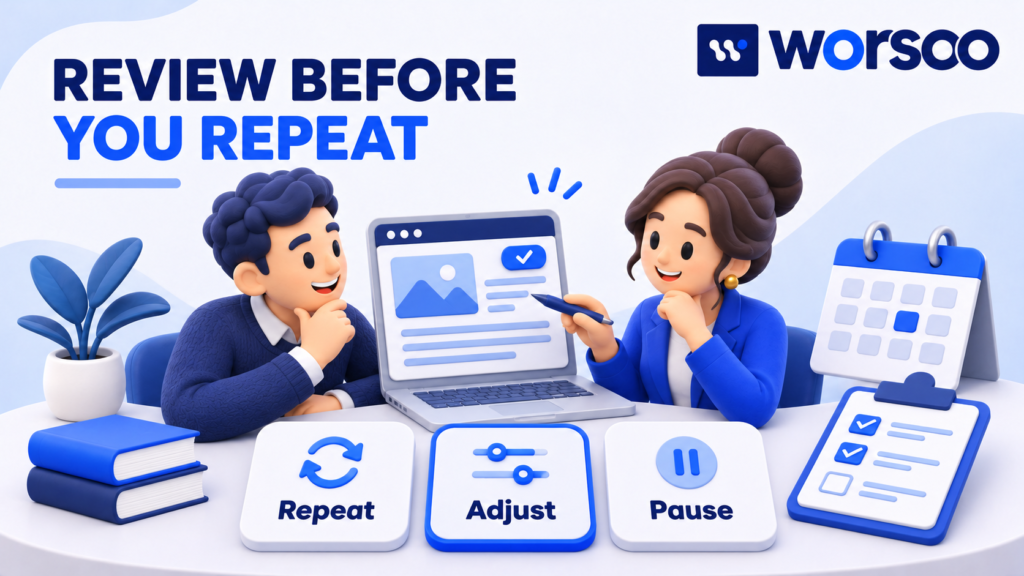
When should you repeat a placement?
Consider another contribution when the first one reached the intended audience, delivered useful evidence, and had a cost that fits your goal.
Keep the follow-up useful. Give readers a new question, example, or lesson rather than rewriting the same article for another link.
Adjust the next test when there is a specific problem you can address. That could mean a better-matched topic, a more useful destination, or clearer distribution terms.
Pause when the audience does not fit, delivery repeatedly falls short, or the economics remain weak after a fair review.
Sometimes the correct conclusion is “not enough evidence yet.” Record what is missing and decide whether it is worth collecting. You do not have to label every placement a success or a failure immediately.
Frequently asked questions
Does guest posting still work for SEO?
Useful guest contributions can support discovery and referral traffic. Search benefits are uncertain, and links created to manipulate rankings can fall under Google’s spam policies. Judge each campaign by its purpose, execution, and measured outcomes.
How many guest posts do I need?
There is no universal number. Start with a manageable test, agree on a goal, and review the evidence before expanding. Publishing more articles does not fix poor audience fit.
Is a high-DR website always a better choice?
No. A domain metric does not tell you how many relevant people will read your article. Check the section, audience, distribution, and the path from the article to your offer.
How soon should I expect results?
Readers may arrive soon after publication or later through continued discovery. Set review dates based on the promotion plan and buying cycle. No fixed waiting period guarantees traffic or leads.
Can a nofollow or sponsored link still bring customers?
Yes, people can click a working link with these attributes. Whether those visitors become customers depends on their needs and the destination. Track the actual results rather than assume them.
Should I stop if the first guest post gets no leads?
Check delivery, tracking, readership, audience fit, and the destination first. One small test may not give a clear answer. Repeat only when you have a sensible reason, an acceptable cost, and a way to learn from the next placement.
Plan guest posting around a clear business goal
Before choosing another publisher, write down who you want to reach, what useful information you can offer, and how you will judge the result.
If you need help planning outreach and reviewing relevant opportunities, explore Worsoo’s SEO services. Share your website, target market, and main goal so the discussion starts with the audience and outcome that matter to your business.