

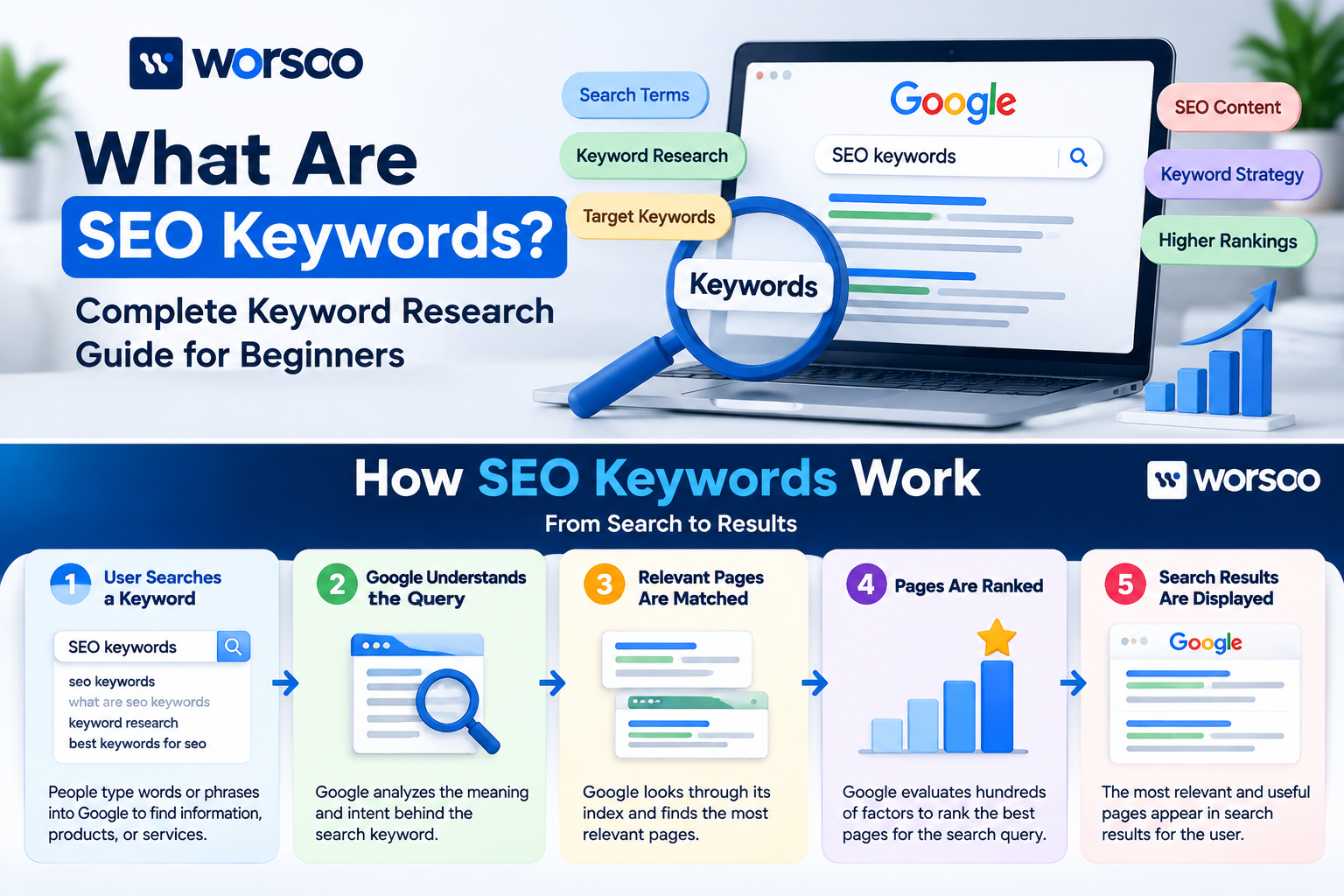
Every search on Google starts with words.
Someone searching:
- “best running shoes”
- “how to fix a leaking pipe”
- “SEO company for small businesses”
is using specific words or phrases to find information, products, services, or solutions.
These search terms are called SEO keywords.
Keywords are one of the most important foundations of search engine optimization because they help search engines understand what a webpage is about and help businesses connect with people who are actively searching for their solutions.
However, modern SEO is not about repeating the same keyword hundreds of times.
Successful SEO focuses on understanding user needs, matching search intent, and creating valuable content that answers real questions.
In this guide, you will learn what SEO keywords are, why they matter, different types of keywords, and how to use them correctly.
Quick Answer: What Are SEO Keywords?
SEO keywords are words and phrases that people type into search engines when looking for information, products, services, or answers. Businesses use these keywords to create content that matches what their audience is searching for.
For example:
A person searches:
“best SEO tools for beginners”
The phrase “best SEO tools for beginners” is an SEO keyword.
A website that publishes a detailed guide about SEO tools can optimize its content around this keyword to increase its chances of appearing in search results.
Why Are SEO Keywords Important?
Search engines need to understand what your website pages are about.
Keywords create a connection between:
User Search → Website Content → Search Result
Without keywords, search engines may have difficulty understanding which searches your content should appear for.
For businesses, the right keywords can help generate:
| Benefit | How It Helps |
|---|---|
| Targeted Traffic | Brings visitors interested in your topic |
| Better Visibility | Improves chances of appearing in search results |
| More Leads | Connects businesses with potential customers |
| Content Ideas | Helps identify topics people search for |
| Audience Insights | Shows what users need and want |
The goal of SEO keywords is not simply to attract more visitors.
The goal is to attract the right visitors.
How Do SEO Keywords Work?
When someone searches on Google, the search engine tries to understand:
- What the person wants
- Why they are searching
- Which pages provide the best answer
For example:
Search:
The user likely wants:
- Beginner guides
- Tutorials
- Learning resources
- Step-by-step explanations
A helpful educational article would match this search.
Now consider:
Search:
“SEO agency pricing”
The user may be closer to making a decision.
They may want:
- SEO companies
- Pricing information
- Service packages
- Comparisons
Both searches are related to SEO, but the user’s purpose is different.
This is why keyword research is not only about finding popular words. It is about understanding what people want when they search.
Types of SEO Keywords
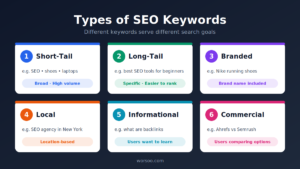
Different keywords serve different purposes.
Understanding keyword types helps you create better SEO strategies.
1. Short-Tail Keywords
Short-tail keywords are broad search terms that usually contain one or two words.
Examples:
- SEO
- marketing
- shoes
- laptops
These keywords usually have high search volume but strong competition.
| Advantage | Disadvantage |
|---|---|
| Large audience | Difficult to rank |
| High search volume | Less specific |
| Good for awareness | Lower buying intent |
For new websites, short-tail keywords are usually harder to rank for because large websites already compete for them.
2. Long-Tail Keywords
Long-tail keywords are longer and more specific search phrases.
Examples:
- SEO keywords for small businesses
- best SEO tools for beginners
- how to find keywords for a blog
Long-tail keywords usually have lower search volume but better targeting.
| Advantage | Disadvantage |
|---|---|
| Lower competition | Lower traffic volume |
| More specific visitors | Smaller audience |
| Better conversion potential | Requires detailed content |
For newer websites, long-tail keywords often provide better ranking opportunities.
3. Branded Keywords
Branded keywords include a company or brand name.
Examples:
- Worsoo SEO services
- Nike running shoes
- Apple iPhone
These searches usually come from people who already know a brand.
Branded keywords are important for:
- Brand visibility
- Customer trust
- Repeat visitors
4. Local Keywords
Local keywords include a location.
Examples:
- SEO agency in New York
- digital marketing company California
- SEO services near me
These keywords are important for businesses targeting specific locations.
Local SEO strategies often focus on:
- Location pages
- Google Business Profile optimization
- Customer reviews
- Local content
5. Informational Keywords
Informational keywords are searches where users want to learn something.
Examples:
- what is SEO
- how does Google rank websites
- what are backlinks
These keywords are valuable for building authority because they help websites attract users at the beginning of their search journey.
6. Commercial Keywords
Commercial keywords show that users are researching before making a decision.
Examples:
- best SEO tools
- SEO agency reviews
- Ahrefs vs Semrush
These users may become customers after comparing options.
Keyword Intent: The Most Important Part of SEO Keywords
Choosing keywords is not only about search volume.
You also need to understand search intent.
Search intent means:
The reason behind a user’s search.
A keyword with lower traffic but strong intent can often provide better results than a keyword with thousands of searches.
Example:
Keyword:
SEO
Search volume:
Very high
Problem:
The intent is unclear.
The user could want:
- SEO definition
- SEO tools
- SEO services
- SEO jobs
Another keyword:
SEO agency for small businesses
Search volume:
Lower
Intent:
Very specific
The second keyword may bring better business opportunities.
SEO Keyword Research Process
Keyword research helps you discover the words your audience uses when searching online.
A simple keyword research process includes the following steps.
Step 1: Understand Your Audience
Before finding keywords, understand your target audience.
Ask:
- Who are your customers?
- What problems do they have?
- What questions do they search?
- What solutions are they looking for?
For example, a small business owner may search:
- how to increase website traffic
- why my website is not ranking
- SEO company for small business
Understanding customers helps you find valuable keywords.
Step 2: Find Keyword Ideas
Keyword ideas can come from different sources:
- Google autocomplete suggestions
- Competitor research
- SEO tools
- Customer questions
- Industry forums
- Online communities
Popular SEO tools include:
- Ahrefs
- Semrush
- Google Keyword Planner
These tools help analyze:
- Search volume
- Competition
- Keyword difficulty
- Related keywords
Step 3: Analyze Keyword Difficulty
Not every keyword is a good opportunity.
A keyword may have thousands of searches but be extremely difficult to rank for.
Important keyword factors include:
| Factor | Meaning |
|---|---|
| Search Volume | Number of searches |
| Competition | Number and strength of competitors |
| Keyword Difficulty | Ranking challenge |
| Search Intent | User purpose |
| Relevance | Connection with your website |
A good keyword strategy balances opportunity and difficulty.
Where Should You Use SEO Keywords?
Keywords should appear naturally throughout your content.
Important locations include:
Page Title
Your title should clearly explain what the page is about.
Example:
Better:
What Are SEO Keywords? Complete Keyword Research Guide
Not:
Complete Guide
Headings
Use keywords in headings where they naturally describe the section.
Example:
How To Find SEO Keywords
Introduction
Mention the main topic early so readers and search engines understand the purpose of the article.
URL
A clean URL helps users understand the page.
Example:
Good:
/what-are-seo-keywords/Poor:
/page123/Content
Use keywords naturally with related terms.
Do not force keywords into every sentence.
Keyword Stuffing: A Common SEO Mistake
Keyword stuffing means using keywords excessively to manipulate rankings.
Example:
“SEO keywords help SEO because SEO keywords are important SEO keywords for SEO.”
This creates a poor reading experience.
Modern SEO focuses on:
- Topic coverage
- Helpful information
- Natural language
- User satisfaction
Search engines are better at understanding topics, meanings, and relationships between words.
SEO Keywords vs Search Queries
These terms are connected but different.
| SEO Keywords | Search Queries |
|---|---|
| Keywords marketers target | Words users type into Google |
| Part of SEO planning | Real user behavior |
| Used to create content strategies | Used to find information |
Example:
Target keyword:
SEO keywords
Actual search:
how do SEO keywords work for websites
How Worsoo Uses Keyword Research
At Worsoo, keyword research is not only about finding keywords with high search volume.
A successful SEO keyword strategy focuses on:
- Understanding audience problems
- Finding realistic ranking opportunities
- Matching search intent
- Creating useful content
- Building long-term authority
The best keywords are the ones that connect businesses with people who actually need their solutions.
Frequently Asked Questions About SEO Keywords
What are SEO keywords?
SEO keywords are words and phrases people search on Google that help businesses create content optimized for search visibility.
Why are keywords important in SEO?
Keywords help search engines understand website content and help businesses attract relevant visitors.
How do I find SEO keywords?
You can find keywords through SEO tools, competitor research, Google suggestions, and customer questions.
How many keywords should one page target?
A page should focus on one main keyword and include related keywords that support the topic naturally.
Are long-tail keywords easier to rank?
Usually yes. Long-tail keywords often have lower competition and more specific search intent.
Should I repeat my keyword many times?
No. Use keywords naturally and focus on creating helpful content that answers user questions.
Final Thoughts
SEO keywords are the connection between what people search for and the content businesses create.
A successful SEO strategy does not begin with randomly publishing articles.
It starts with understanding:
- What people search for
- Why they search
- What answers they need
- How your website can help
The right keywords can improve search visibility, attract targeted visitors, and support long-term organic growth.
At Worsoo, we help businesses build data-driven SEO strategies through keyword research, content optimization, technical SEO, and sustainable growth methods.
Need help finding the right keywords for your website? Get a free SEO audit from Worsoo and discover new opportunities to improve your organic visibility.