

A website can look professional and still fail to generate traffic from Google.
Many businesses invest in website design, content, and marketing but struggle to improve rankings because hidden SEO issues prevent their pages from performing properly.
This is why an SEO audit is important.
An SEO audit is a detailed review of a website’s technical health, content quality, search visibility, user experience, and optimization opportunities.
It helps businesses identify problems affecting rankings, organic traffic, and online growth.
For companies competing in the US market, a professional SEO audit provides valuable insights into what is working, what needs improvement, and what actions can create better search performance.
Businesses looking to improve their organic visibility can explore Worsoo’s SEO services to build a stronger search growth strategy.
What Is an SEO Audit?
An SEO audit is a complete analysis of a website to identify factors that may prevent it from ranking effectively on search engines.
Think of an SEO audit as a health checkup for your website.
Just like regular maintenance helps prevent problems in a business, an SEO audit identifies issues before they negatively affect your search performance.
A professional SEO audit usually evaluates:
- Technical SEO issues
- Website structure
- Page speed
- Mobile usability
- Content quality
- Keyword targeting
- Internal links
- Backlink profile
- Indexing problems
- User experience
Google recommends following SEO best practices that help search engines crawl, understand, and index website content properly. You can learn more through the official Google SEO Starter Guide.
Why Is an SEO Audit Important?
An SEO audit is important because it helps businesses understand why their website may not be achieving better rankings.
Without an audit, businesses often make SEO decisions based on assumptions instead of actual website data.
A detailed SEO audit can help identify technical problems, content gaps, ranking opportunities, and areas where competitors may be outperforming your website.
1. Identify Technical SEO Problems
Technical issues can prevent search engines from properly crawling and understanding your website.
Even high-quality content may struggle to rank if technical problems exist.
An SEO audit can identify issues such as:
- Broken links
- Slow page speed
- Indexing problems
- Duplicate content
- Missing metadata
- Poor website structure
- Mobile usability issues
Fixing these issues creates a stronger foundation for SEO growth.
To understand how search engines discover and organize websites, businesses can learn more about how Google Search works.
2. Discover Ranking Issues
Many businesses ask:
“Why is my website not ranking on Google?”
The answer is often hidden SEO problems.
An SEO audit helps identify ranking issues such as:
- Targeting the wrong keywords
- Weak content optimization
- Poor internal linking
- Technical errors
- Lack of authority signals
Finding these issues allows businesses to create a clear improvement plan instead of making random SEO changes.
3. Improve Website Visibility
The main goal of SEO is helping your website appear when potential customers search for your products or services.
An SEO audit helps identify opportunities to improve visibility through:
- Better keyword targeting
- Improved page optimization
- Stronger content structure
- Technical improvements
For example, a local service business may discover that important service pages are missing location-based keywords or do not answer customer questions clearly.
4. Improve User Experience
SEO is not only about search engines.
Google also focuses on providing users with helpful and accessible websites.
An SEO audit reviews important user experience factors, including:
- Website speed
- Mobile performance
- Navigation
- Content readability
- Page structure
A better user experience helps visitors stay longer and increases the chances of turning visitors into customers.
5. Find Content Opportunities
Content plays a major role in modern SEO.
However, many businesses publish content without understanding what their customers are searching for.
A content-focused SEO audit can identify:
- Missing topics
- Outdated content
- Keyword opportunities
- Low-performing pages
- Content gaps
Creating content that matches search intent helps businesses attract more relevant visitors.
If you are building your SEO foundation, you can learn more about what SEO is and how it works.
6. Analyze Competitor Opportunities
A strong SEO audit also looks beyond your own website.
Competitor analysis helps identify:
- Keywords competitors rank for
- Content strategies they use
- Backlink opportunities
- Areas where your website can improve
This information helps businesses create a more competitive SEO strategy.
What Does an SEO Audit Include?
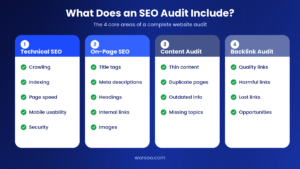
A complete SEO audit usually includes several important areas.
Technical SEO Audit
A technical SEO audit reviews whether search engines can properly access and understand your website.
It checks:
- Website crawling
- Indexing
- Page speed
- Mobile compatibility
- Website architecture
- Security issues
On-Page SEO Audit
An on-page SEO audit evaluates individual pages.
It reviews:
- Title tags
- Meta descriptions
- Headings
- Keyword usage
- Content structure
- Internal links
- Image optimization
Content Audit
A content audit evaluates whether website content is useful, relevant, and competitive.
It identifies:
- Thin content
- Duplicate pages
- Outdated information
- Missing topics
- Poor keyword targeting
Backlink Audit
A backlink audit reviews external links pointing to your website.
It identifies:
- Quality backlinks
- Harmful links
- Lost backlinks
- Link-building opportunities
How Often Should You Perform an SEO Audit?
The ideal frequency of SEO audits depends on your website size, industry, competition, and how often your website changes.
Most businesses should perform an SEO audit:
- Every 6–12 months
- After a website redesign
- After major Google algorithm updates
- When organic traffic suddenly drops
- Before starting a new SEO campaign
Regular audits help businesses identify problems early and maintain consistent search visibility.
An SEO audit is not a one-time task. Search engines, competitors, and customer behavior constantly change, so businesses need ongoing optimization.
SEO Audit vs Website Audit: What Is the Difference?
Although these terms are sometimes used interchangeably, they focus on different areas.
A website audit may review:
- Website design
- Security
- User experience
- Website functionality
- Technical performance
An SEO audit focuses specifically on factors that influence search visibility, including:
- Search rankings
- Organic traffic
- Keyword performance
- Website indexing
- Content optimization
For businesses focused on online growth, an SEO audit provides specific insights into improving search performance.
How Does an SEO Audit Help Small Businesses?
Small businesses often compete against larger companies with bigger marketing budgets.
An SEO audit helps small businesses identify opportunities they may be missing.
Benefits include:
- Finding easier keyword opportunities
- Improving local search visibility
- Fixing technical problems
- Creating better content
- Improving website conversions
For example, a local home service company may discover through an SEO audit that competitors are ranking because they have better service pages, stronger local content, and more relevant backlinks.
A detailed audit helps businesses understand where improvements can create the biggest impact.
Common SEO Audit Mistakes Businesses Make
Only Checking Rankings
Many businesses focus only on keyword positions.
While rankings are important, SEO success also depends on:
- Organic traffic
- Leads
- Customer enquiries
- Conversions
- User engagement
A website ranking for keywords that do not generate business results may not provide real value.
Ignoring Technical Problems
Some businesses focus only on creating content while ignoring technical SEO.
Problems like slow pages, broken links, or indexing issues can prevent even great content from performing well.
Performing an Audit Without Taking Action
An SEO audit only creates value when businesses implement improvements.
The purpose of an audit is not just finding problems. It is creating a clear roadmap for fixing those problems.
How to Perform an Effective SEO Audit
A successful SEO audit should follow a structured process.
Step 1: Analyze Technical SEO
Review:
- Website speed
- Mobile performance
- Indexing status
- Crawl errors
- Site structure
Step 2: Review Content Performance
Analyze:
- Existing pages
- Keyword targeting
- Content quality
- Search intent
- Missing topics
Step 3: Check Internal Linking
Internal links help search engines understand relationships between pages.
A strong internal linking structure helps distribute authority and guides visitors toward important pages.
Step 4: Review Backlinks
Analyze:
- Link quality
- Referring domains
- Potential harmful links
- New opportunities
Step 5: Create an Improvement Plan
The final step is prioritizing fixes based on:
- SEO impact
- Difficulty
- Business goals
This ensures businesses focus on changes that can create the greatest results.
How SEO Audits Support AI Search and Modern SEO
Search is changing with the growth of AI-powered search experiences.
Businesses now need websites that are not only optimized for traditional rankings but also structured clearly for AI systems.
A modern SEO audit should review:
- Content clarity
- Topic authority
- Structured information
- User-focused content
- Website trust signals
Google continues emphasizing helpful, reliable, and people-first content.
Following official search guidance through resources like Google Search Central documentation helps businesses create websites that are easier for search engines to understand.
How Worsoo Helps Businesses Improve SEO Performance
An SEO audit is the first step toward understanding what is preventing your website from reaching its full potential.
At Worsoo, we help businesses identify SEO problems, discover growth opportunities, and create strategies that improve online visibility.
Our SEO process focuses on:
- Technical website analysis
- Keyword research
- Content optimization
- Website structure improvements
- Search performance growth
- Conversion-focused strategies
Whether your website has ranking problems, declining organic traffic, or needs a complete SEO roadmap, Worsoo can help you understand what needs improvement.
Our team also provides complete digital marketing services to help businesses build stronger online visibility through multiple marketing channels.
Ready to Find Out What Is Holding Your Website Back?
Your website may already have opportunities that are hidden behind technical issues, content gaps, or missed optimization strategies.
A professional SEO audit can help you:
- Discover ranking problems
- Find new growth opportunities
- Improve Google visibility
- Attract more qualified customers
Get started with Worsoo and take the next step toward improving your website performance.
Visit Worsoo today and discuss your SEO growth strategy.
Frequently Asked Questions About SEO Audits
What is an SEO audit?
An SEO audit is a detailed review of a website’s technical health, content, keywords, backlinks, and optimization factors that affect search visibility.
Why is an SEO audit important?
An SEO audit helps businesses identify ranking issues, improve website performance, fix technical problems, and discover opportunities to increase organic traffic.
How long does an SEO audit take?
The time required depends on website size and complexity. Small websites may take a few days, while large websites require more detailed analysis.
How often should a website have an SEO audit?
Most businesses should perform an SEO audit every 6–12 months or whenever major website changes occur.
Can an SEO audit improve Google rankings?
An SEO audit does not automatically improve rankings, but it identifies problems and opportunities that can help improve SEO performance when properly implemented.
What tools are used for SEO audits?
SEO professionals use tools for crawling websites, analyzing keywords, checking backlinks, monitoring performance, and identifying technical issues.
Website owners can also track search performance through Google Search Console.
Final Thoughts
An SEO audit is one of the most valuable steps businesses can take to improve their online presence.
It helps uncover hidden problems, improve website performance, and create a clear roadmap for SEO growth.
Instead of guessing why your website is not ranking, an SEO audit provides data-driven insights that help businesses make better decisions.
By regularly reviewing technical SEO, content quality, website structure, and search performance, businesses can build a stronger foundation for long-term organic growth.
A well-optimized website does not happen by accident. It requires continuous improvement, monitoring, and a strategy focused on providing value to users.
With the right SEO approach, businesses can improve visibility, attract more qualified visitors, and turn search traffic into measurable growth.